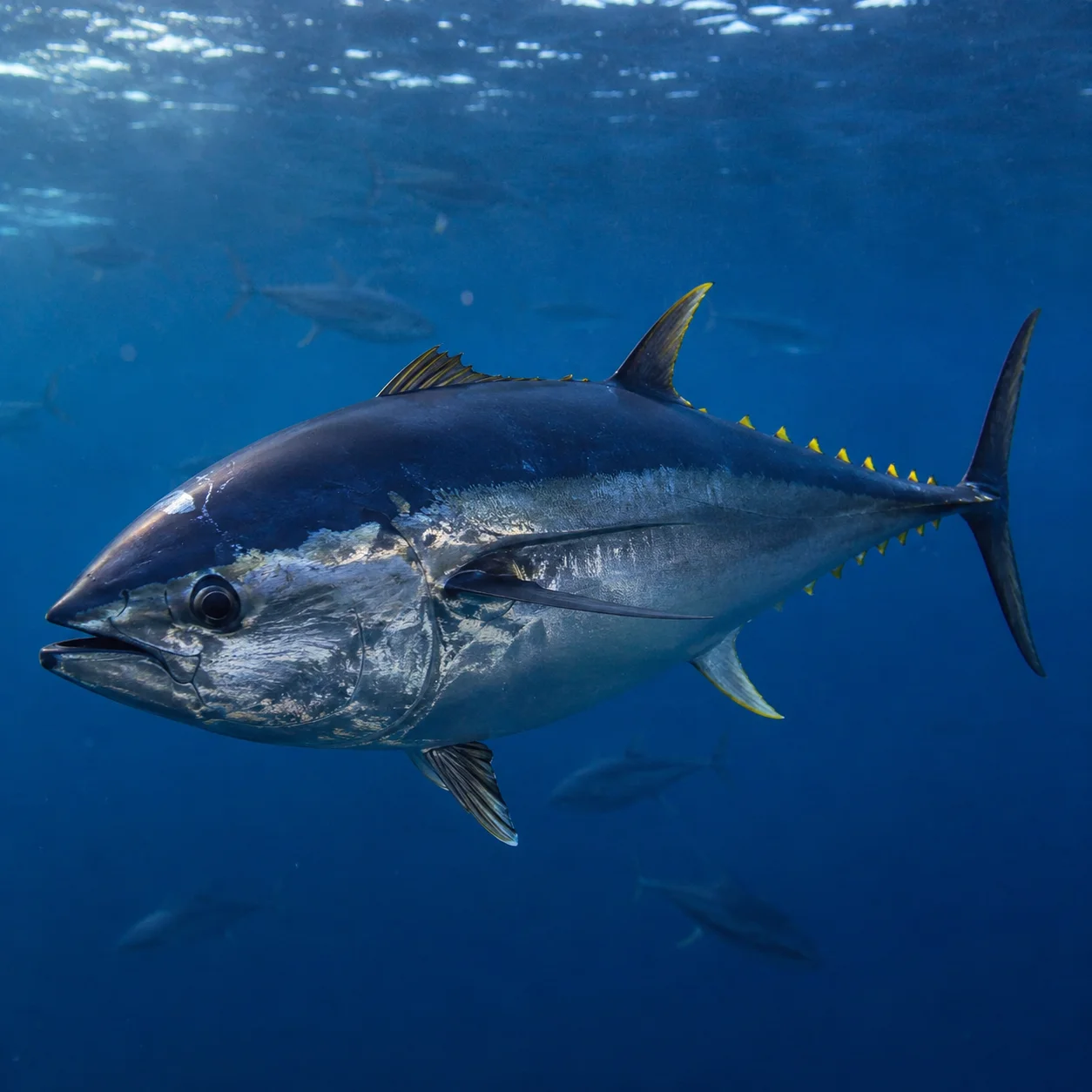
The spotted seabass can produce very fast-paced fishing. When it feeds in a shoal over the right sectors, bites can come thick and fast, with fish following one after another. More discreet than European seabass, it mainly frequents coastal areas where the seabed plays a major role: rock, sand, muddy sand, edges between two bottom types and small drop-offs. To place this species within a broader view of the coastline, the seasons and the other fish tracked on the west coast, also check our parent page on Atlantic fish species.
Quick facts on spotted seabass
Where to look: shallow coastal areas, beaches, sandy edges, mixed bottoms, small drop-offs, rocks, estuaries and food-rich sectors.
When to look: mainly during the warm season, when the water warms up and small fish concentrate close to the coast.
Useful depth: often from the shoreline down to around 15 m, with frequent fishing in shallow coastal areas.
Main food: small fish, sandeels, shrimp, crabs, molluscs, marine worms and small cephalopods.
Signals to watch for: shoaling activity, small feeding frenzies, birds, baitfish, edges between sand and rock, slightly churned water.
Spotted seabass, a more discreet cousin of European seabass
Spotted seabass (Dicentrarchus punctatus), also called spotted bass, belongs like European seabass to the Moronidae family. It shares a similar general silhouette of a coastal predator, but is distinguished by several clear criteria: visible spots on the flanks that persist into adulthood, a well-marked dark spot on the gill cover, proportionally larger eyes and often a slimmer build.
Even though it resembles European seabass, spotted seabass often frequents somewhat different sectors. It's regularly found over rocky, sandy or mixed bottoms, in coastal areas where relief, depth and bottom quality all play an important role. It appears more closely tied to specific sectors and moderate depths than to large, heavily churned areas.
For fishing purposes, this difference is worth keeping in mind. European seabass is often sought on active edges, visible feeding activity or strong water movement. Spotted seabass, on the other hand, seems more associated with small structured bottoms, mixed zones, rocky or sandy sectors, and spots where food, depth and bottom type remain consistent.
How to tell spotted seabass apart from European seabass?
Spotted seabass can be mistaken for a young European seabass, but a few criteria allow quick identification:
- visible black spots on the flanks, often still present in adults,
- a well-marked dark spot on the gill cover,
- proportionally larger eyes,
- often a slimmer build and a generally smaller average size,
- sometimes more gregarious behaviour, with fish able to move in groups.
| Element | Data |
|---|---|
| Common name | Spotted seabass |
| Other name | Spotted bass |
| Scientific name | Dicentrarchus punctatus |
| Family | Moronidae |
| Species type | Demersal coastal fish |
| Typical size | Around 25 to 40 cm |
| Maximum size often cited | Around 60 to 70 cm |
| Depth observed | Surface to around 70 m |
| Often useful prospecting depth | Around 10 m |
| Dominant habitats | Rock, sand, muddy sand, structured coasts |
| Distribution | Eastern Atlantic, Bay of Biscay, Mediterranean |
| Tolerated temperature | Around 8 to 22 °C |
| Often favourable temperature | Around 12 to 18 °C |
Where does spotted seabass live on the Atlantic coast?
Spotted seabass is a coastal species. It's found near beaches, rocks, sandy bottoms, muddy bottoms, mixed edges and sometimes in slightly brackish waters, especially near estuaries or sheltered areas.
It doesn't seek out a single bottom type. What matters most is the presence of a lively sector: a bottom that shelters food, a small drop-off, an edge between sand and rock, a churned area or subtle relief. Even an unremarkable-looking sector can become interesting if it concentrates prey.
Unlike European seabass, often sought on very active edges, strong currents or large drop-offs, spotted seabass can prove interesting in calmer, more localised areas. So it's worth looking at bottom type, depth and food presence rather than just major water movement.
| Type of sector | Why it can be interesting |
|---|---|
| Coastal rock | Shelter, small fish, crustaceans and hunting near the bottom |
| Sand or muddy sand | Worms, small crustaceans and burrowing fish |
| Rock / sand edge | Transition zone rich in food |
| Drop-off or bottom break | Subtle relief that concentrates prey |
| Churned beach | Oxygenated water, food stirred up by swell |
| Coastal brackish zone | Possible presence near estuaries or sheltered areas |
To locate it, you need to look for the small details that make an area lively: food, a change in bottom type, subtle relief, churned water or natural shelter.
When to fish spotted seabass? A year-round species, more consistent in stable conditions
Spotted seabass can be found year-round on the Atlantic coast. It tolerates a wide thermal range, around 8 to 22 °C, with a zone often more favourable around 12 to 18 °C. For fishing, this means it can stay accessible across several seasons, as long as you target the right sectors.
Not all periods are equal, though. Spotted seabass often becomes more interesting to target when temperature, depth and bottom quality stay consistent. It seems to depend less on the big surface signals than European seabass, and more on a stable coastal environment, rich in food and favourable to its presence near the bottom.
Spawning is generally reported in winter. This period remains an important marker in its seasonal cycle and should be respected. Outside this phase, spring, summer and autumn can offer good fishing opportunities in well-defined coastal sectors.
| Period | Interest for fishing |
|---|---|
| Winter | Presence possible, spawning reported, period to approach with caution |
| Spring | Good period in coastal sectors that stabilise and concentrate food |
| Summer | Regular fishing possible over favourable bottoms, shallow to moderate depths |
| Autumn | Possible continuity in the same habitats if conditions remain favourable |
| Year-round | A species worth targeting if bottom, temperature, depth and food remain consistent |
Spotted seabass therefore isn't just a fish of a short seasonal window. For fishing, it's mainly targeted by cross-referencing good habitats with stable conditions and available food.
What does spotted seabass eat? Understanding its prey to locate it better
Spotted seabass is an opportunistic coastal predator. It feeds on small prey found near the bottom or along edges: small fish, sandeels, shrimp, crabs, marine worms, molluscs and small cephalopods.
For fishing, this diet matters because it helps explain why some sectors become more interesting than others. A sand-rock edge, a churned beach, a small drop-off or an estuary zone can concentrate enough food to attract spotted seabass.
Spotted seabass's main prey
- small baitfish,
- sandeels,
- shrimp,
- small crabs,
- marine worms,
- molluscs,
- small cephalopods.
Matching your search to the prey present
| Dominant prey | Likely area | Useful reading for fishing |
|---|---|---|
| Small fish | Edges, estuaries, beaches, rocky areas | Watch for small feeding frenzies, birds and baitfish |
| Sandeels | Sandy bottoms, beaches, sand-rock edges | Look for churned areas and sandy drop-offs |
| Shrimp and crabs | Rocks, mixed bottoms, sheltered areas | Fish near the bottom with slower retrieves |
| Worms and molluscs | Sand, muddy sand, brackish zones | Target sectors stirred up by tide or swell |
Spotted seabass can also move in groups. When an area concentrates small prey, bites can therefore come close together. Conversely, a sector with the right bottom but no active food can remain unproductive.
How to fish spotted seabass from a boat?
Boat fishing for spotted seabass lets you precisely prospect small coastal bottoms, rock-sand edges, estuary areas, churned beaches and small drop-offs. The goal isn't necessarily to go deep, but to find the sectors where bottom, food and the conditions of the moment come together.
Spotted seabass can hold near the bottom, but also rise in the water column when following small fish. So you need to adapt your search to the activity you observe: baitfish, small feeding frenzies, birds, churned water or echoes close to the bottom.
Reading small coastal bottoms
The most interesting areas are often discreet: an edge between sand and rock, a small drop-off, a change in water colour, a slightly churned beach or an estuary sector where prey concentrate.
From a boat, it's useful to make several short passes rather than staying long over an inactive area. If the fish are grouped together, bites can come quickly one after another over a precise stretch.
Adjusting drift and discretion
In shallow water, discretion matters a lot. An approach that's too noisy, a motor that's too close, or a poorly placed drift can push fish out of the area.
It's better to position yourself ahead of the drift, let the boat work naturally, and present lures along edges, drop-offs or food-rich zones without running straight over the fish.
Priority areas to prospect
| Area | Why it can be interesting | Recommended approach |
|---|---|---|
| Rock / sand edge | Food-rich transition | Slow prospecting with soft lures or small minnows |
| Churned beach | Food stirred up, oxygenated water | Passes parallel to the edge or drop-off |
| Small drop-off | Subtle relief that concentrates prey | Focus on depth changes |
| Estuary or brackish zone | Small fish, worms, shrimp | Fish current seams and calm edges |
| Coastal rocks | Shelter, crustaceans, small fish | Precise presentations near the bottom or along the edge |
FishPredict helps spot the moments when temperature, depth, bottom type, current and feeding activity become consistent. For spotted seabass, this fine-grained reading of small coastal sectors is often more useful than searching large, very deep areas.
What lures should you use to fish spotted seabass?
Spotted seabass is fished with fairly discreet lures, matched to its average size and the small prey it consumes. Choice mainly depends on the bottom, depth, fish activity and the food present in the area.
Over small bottoms, rock-sand edges, churned beaches or estuary zones, small soft lures, shallow-diving minnows and sandeel imitations are often the most consistent. The aim is to present easy-to-attack prey, without oversizing the lure.
Choosing your lure by situation
| Situation | Suitable lures | Recommended approach |
|---|---|---|
| Active small fish | Small minnows, thin shads, slugs | Prospecting edges and small feeding frenzies |
| Sandeels present | Elongated lures, slugs, small thin shads | Straight retrieve or light lift-and-drop near the sand |
| Rocks and mixed bottoms | Small soft lures, creature baits, discreet shads | Slow retrieves near the bottom |
| Clear water or wary fish | Natural lures, small formats, light rigs | Discreet, precise presentation |
| Churned or coloured water | Minnows, more visible shads, contrasting colours | More active prospecting of churned areas |
Adjusting size and weight
Lures of 5 to 10 cm already cover many situations for spotted seabass. With more active fish or larger prey present, you can size up slightly, but small formats tend to be the most consistent performers.
Vibration blades around 20 g also give excellent results, especially for quickly prospecting small bottoms, edges, subtle drop-offs or areas where fish are following small prey.
Weight should stay consistent with depth and current. Over edges and shallow depths, a light presentation keeps the swimming action natural. Over a small drop-off, a more pronounced bottom or a faster drift, it can help to increase weight slightly to stay in the right water layer.
Favour single hooks
For spotted seabass, it's preferable to replace treble hooks with single hooks whenever possible. They limit injury, make unhooking easier and improve survival chances when releasing fish.
Single hooks remain very effective when properly sized and oriented. In practice, the difference in effectiveness compared with trebles is often small, while the gain for fish welfare is significant.
Don't overlook natural bait
Although lures are practical for prospecting quickly, spotted seabass can also respond to natural bait. Marine worms, small pieces of fish, shrimp or small cephalopods can be effective over sandy, muddy, mixed bottoms or near estuaries.
This approach is especially interesting when fish are close to the bottom or when surface activity is low. In all cases, match the presentation to the prey genuinely present in the area.
What conditions favour spotted seabass fishing?
The first criterion is the bottom. For this species, it's not just scenery: it plays a direct role in the fish's presence. Spotted seabass becomes credible when it finds a sector where the bottom offers shelter, local circulation and hunting opportunities all at once.
The second criterion is depth. The species can be observed from the surface down to around 70 metres, but it appears more consistent at shallow to intermediate depths. An area around 10 metres deep can already correspond to a very credible fishing prospect, especially if the bottom is clean, identifiable and consistent with the rest of the sector.
The third criterion is the edge associated with the bottom. Spotted seabass can respond to certain breaks, transitions and areas of light convergence, but especially when these signals are backed by a favourable bottom type. It doesn't seem to hold on the edge for its own sake; it shows up mainly where the edge reinforces a spot that's already interesting near the bottom.
Temperature and salinity can also give useful clues. Water around 12 to 18 °C often corresponds to a favourable range, and salinity close to 30 to 36 PSU stays consistent with a mostly marine coastal species that's still able to tolerate brackish sectors. As for chlorophyll-a, moderate values around 0.3 to 2.0 mg/m³ can also correspond to productive environments without being excessively loaded.
In practice, the equation for spotted seabass remains fairly simple: identifiable coastal bottom, moderate depth and a stable environment. When this base is good, the area quickly becomes more credible.
Spotted seabass regulations: minimum size, tagging and resource management
This section describes the French regulations. In France, spotted seabass (Dicentrarchus punctatus) isn't subject to a specific quota for recreational fishing on the French Atlantic coast. The minimum landing size generally applied is 30 cm. As with other marine species subject to tagging in France, fish kept must have the lower lobe of the tail fin removed, without preventing the fish from being measured.
In other countries, recreational fishing regulations (minimum sizes, quotas) vary — always check the rules in force in your area before heading out.
⚠️ Important: even though it's sometimes possible to have very productive catches of spotted seabass, the absence of a specific quota shouldn't lead to excessive harvesting. The most sensible approach is to keep only what's needed for reasonable personal consumption.
For released fish, single hooks are strongly recommended. They limit injury, make unhooking easier and improve the fish's chances of survival after release.
FAQ on spotted seabass
What's the difference between spotted seabass and European seabass?
Spotted seabass keeps visible spots on its flanks into adulthood, has a dark spot on the gill cover and often proportionally larger eyes. It's also generally smaller than European seabass.
Where does spotted seabass live?
Spotted seabass lives in coastal waters, over sandy, muddy, rocky or mixed bottoms. It can also frequent estuaries, beaches, rock-sand edges and some slightly brackish zones.
When should you fish spotted seabass?
Spotted seabass can be present year-round, but it often becomes more interesting to target during the warm season, when the water warms up and small fish concentrate close to the coast.
At what depth does spotted seabass hold?
Spotted seabass can range from the surface to around 70 metres. In practice, it's often targeted in shallow coastal areas, around edges, beaches, mixed bottoms and small drop-offs.
What does spotted seabass eat?
Spotted seabass feeds on small fish, sandeels, shrimp, small crabs, marine worms, molluscs and small cephalopods. Its presence often depends on the food available in the area.
How do you fish spotted seabass from a boat?
From a boat, target small coastal bottoms, rock-sand edges, churned beaches, estuary zones and small drop-offs. Discretion, drift and observing small feeding frenzies are important.
What lures should you use to fish spotted seabass?
Small minnows, thin soft lures, sandeel imitations and vibration blades around 20 g are good choices. Small formats of 5 to 10 cm tend to be the most consistent.
Should you use single hooks for spotted seabass?
Yes. Single hooks limit injury, make unhooking easier and improve the survival chances of released fish.