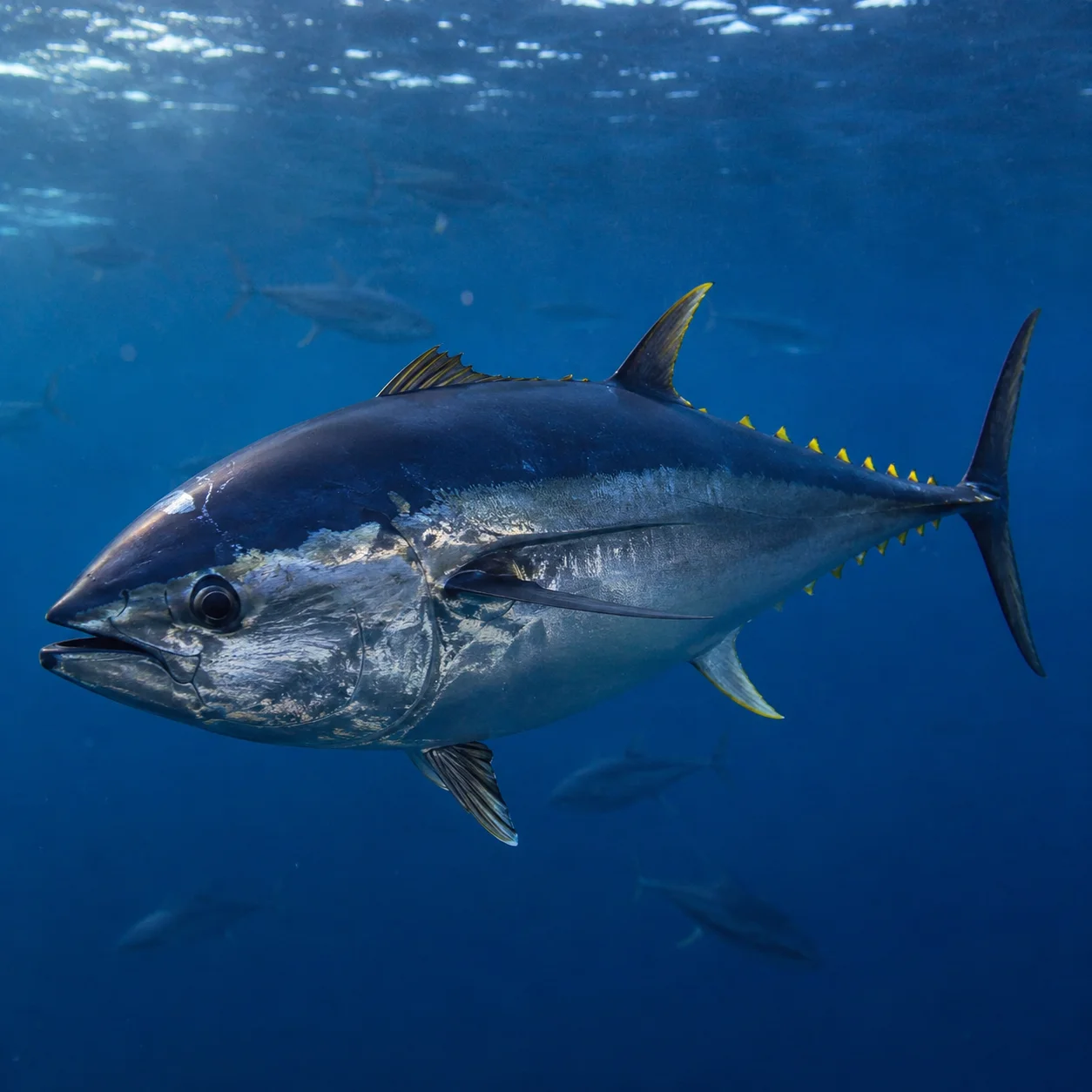
At sea, biological indicators help you understand where life can concentrate: plankton, chlorophyll, small fish, feeding activity and predator presence. For a boat angler, these signals don't guarantee a spot, but they help spot sectors where the food chain may be more active.
An area rich in life becomes especially interesting when combined with other factors: current, water temperature, depth, seabed relief, salinity and time of day. This is one of the key elements to factor in to spot the best sea fishing areas, and to understand why certain areas become active at a given moment.
Quick facts on biological indicators
To watch for: chlorophyll, plankton, baitfish, birds, feeding frenzies and sounder echoes.
Why it's useful: these signals help spot areas where the food chain may be more active.
To cross-reference with: current, temperature, salinity, depth, relief and time of day.
To avoid: treating chlorophyll or plankton as a direct guarantee of fish presence.
Why biological indicators are useful for sea fishing
At sea, fish activity depends heavily on the presence of food. When an area concentrates plankton, small fish or visible feeding activity, it can become more worth watching for a boat angler.
Biological indicators exist precisely to spot these lively sectors. They don't directly show the target fish, but they give clues about an area's ability to support the food chain: first plankton, then small fish, then predators.
For an angler, the value is concrete: it lets you compare several sectors before setting off. An area can become interesting because it receives nutrient input, because it's churned by current, or because it concentrates food along an edge, a drop-off or a front.
These signals aren't a guarantee of a catch. A biologically active area also needs to be cross-referenced with other elements: current, water temperature, depth, relief, salinity and time of day. But when several signals line up, it clearly deserves priority.
The goal is therefore simple: use biological indicators to spot areas where food may concentrate, where small fish may group up, and where predators have more reason to pass through or hunt.
Chlorophyll, plankton and the food chain
Chlorophyll is one of the most useful indicators for understanding biological activity at sea. It's linked to the presence of phytoplankton, meaning plant micro-organisms that form the base of the marine food chain.
For an angler, chlorophyll doesn't mean "guaranteed fish". It rather indicates that an area may be more productive, and therefore more likely to gradually attract zooplankton, then small fish, then predators.
Phytoplankton: the base of marine life
Phytoplankton develops when conditions are favourable: light, nutrients, temperature and water mixing. Some areas become richer than others as a result, particularly near river mouths, fronts, current areas or sectors where nutrients well up.
This phytoplankton is then consumed by zooplankton, which forms the next link in the food chain.
From plankton to small fish, then to predators
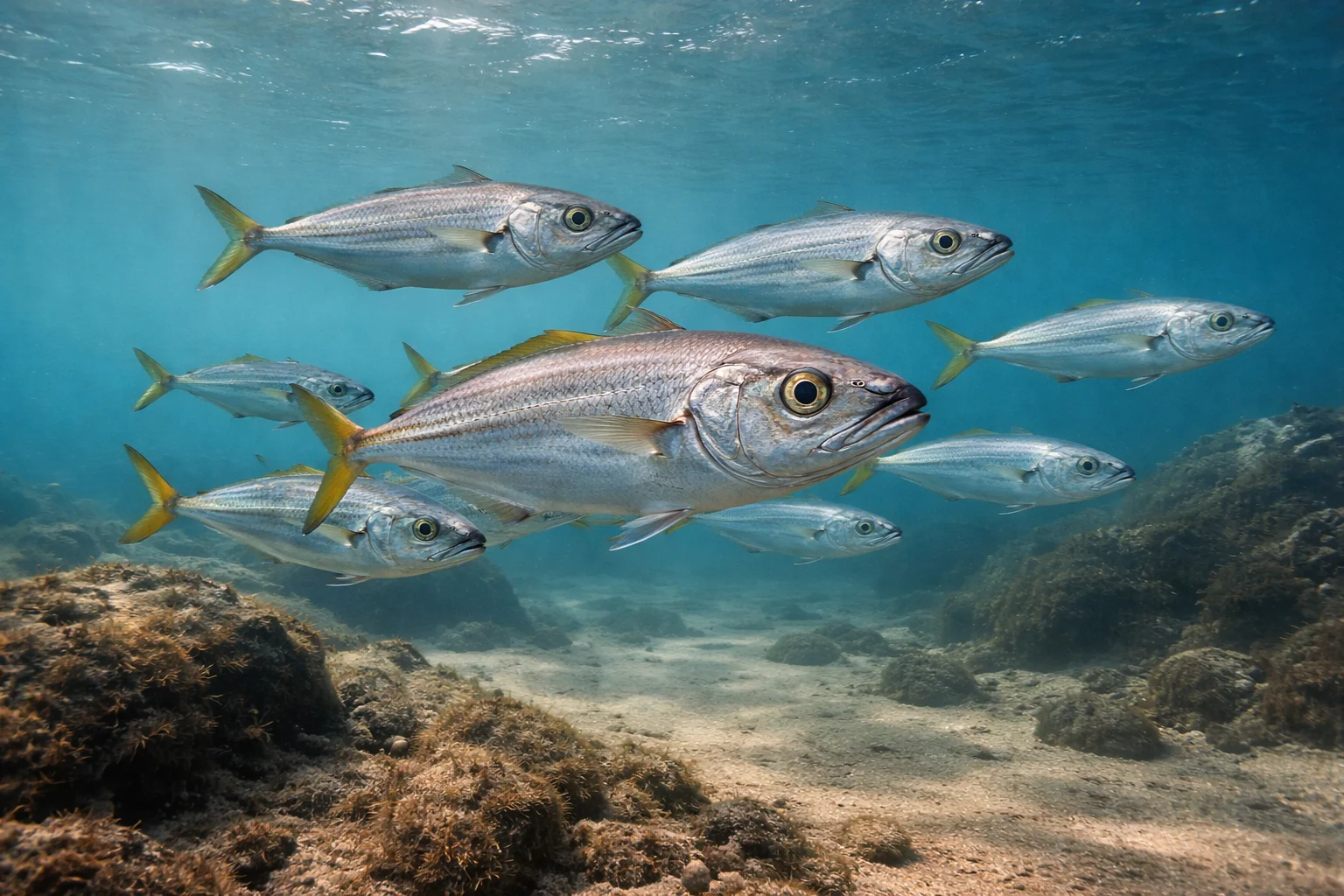
Zooplankton attracts many small fish that feed on it. These include anchovy, sardines, sprats, sandeels and small horse mackerel.
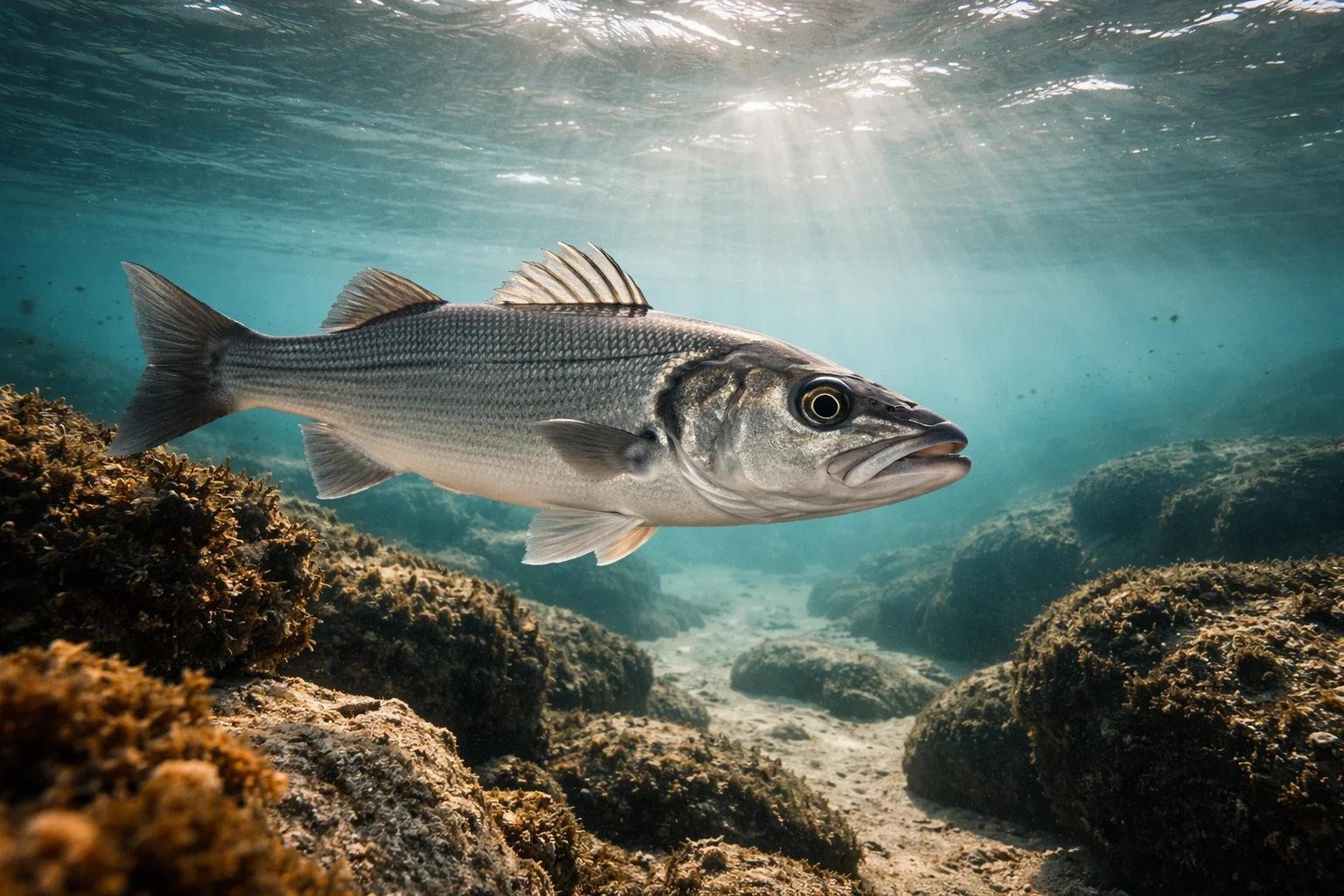
These baitfish play a key role: they concentrate food and in turn attract predators such as seabass, mackerel or pollack. For a boat angler, this dynamic is what matters. An area rich in plankton becomes interesting when it develops into a concentration of small fish, then into hunting activity.
The right reading is therefore not to stop at the biological data alone. A concentration of chlorophyll becomes genuinely interesting when combined with current, relief or a transition zone able to concentrate all this activity.
Where biological activity concentrates at sea
Biological activity isn't spread evenly across the sea. Some areas are poor and inactive, while others concentrate food and become much more worth prospecting.
For a boat angler, the challenge is therefore to spot where this activity is organised, rather than looking for "life" at random.
Some areas naturally favour this concentration:
- river mouths and estuaries, where nutrient input stimulates biological production;
- current edges, which move and accumulate plankton and prey;
- thermal or biological fronts, which create often-active transition zones;
- mixing zones, where nutrients well up and feed the food chain;
- drop-offs and relief, which can fix or channel this activity;
- plateaus and shallow banks, where food circulates and can concentrate.
These areas aren't interesting just because they contain life, but because they organise that life. A current edge or a drop-off can group food into a precise band, which makes hunting easier for predators.
This is often where the real difference lies. A large, slightly productive area can be less interesting than a smaller sector where current, food and relief concentrate activity.
How to read these indicators without getting it wrong
Biological indicators need to be read with care. An area rich in chlorophyll, plankton or biological activity doesn't automatically mean the target fish are present or active.
The main mistake to avoid is believing a single signal is enough. An area can be biologically productive but not very interesting for fishing if it isn't paired with current, good depth, favourable temperature or relief able to concentrate prey.
Careful with interpretation
An area rich in chlorophyll or plankton isn't automatically a good fishing spot. It mainly indicates that part of the food chain may be active.
For a sector to become genuinely interesting, this biological activity needs to combine with other signals: current, relief, temperature, salinity, depth or baitfish presence.
Worth remembering: it isn't always the biologically richest area that fishes best, but often the one where food is concentrated and exploitable by predators.
Conversely, an area with a moderate biological signal can become very interesting if it sits on an edge, a drop-off, a river mouth or a passage zone. It isn't always the "richest" area that fishes best, but often the one where food is best organised.
To properly interpret these indicators, you need to look for overlaps:
- biological activity present;
- current able to move or concentrate food;
- temperature consistent with the moment's activity;
- suitable depth and relief;
- visible signs at sea: birds, feeding frenzies, baitfish, sounder echoes.
The goal isn't to find a perfect indicator, but a combination of signals. The more elements point to the same area, the more that sector deserves priority during your trip.
How FishPredict uses biological indicators
FishPredict doesn't just display a single biological data point. The app relies on an advanced algorithm that cross-references biological indicators with other marine parameters to help spot areas where several conditions become favourable at the same time.
The algorithm also accounts for the specifics of each tracked species. Not all fish react the same way to temperature, currents, salinity or biological activity. FishPredict therefore adapts its analysis to the target species, to spot areas where conditions best match its behaviour.
The goal isn't just to show where there's chlorophyll or plankton, but to understand what these indicators can mean for fishing. An area can be biologically rich but not very interesting if the current is weak, the temperature isn't favourable, or the habitat doesn't match the target species.
To make this reading easier, FishPredict provides different maps that let you analyse several dimensions of activity at sea:
- biological activity;
- water temperature;
- currents;
- salinity;
- depth and relief;
- how conditions evolve up to 4 days ahead.
These maps let you compare several areas before a trip and better understand how conditions are evolving. This lets the angler identify sectors where food may concentrate, where small fish may group up, and where predators are more likely to be active.
FishPredict doesn't replace on-the-water observation, but it lets you prepare your trip with a more complete reading of potentially favourable areas.
FAQ on biological indicators at sea
Do biological indicators really help you find fish?
Biological indicators don't directly give the position of fish, but they help spot areas where food may be present. They become genuinely useful when cross-referenced with current, temperature, depth and relief.
What is chlorophyll in sea fishing?
Chlorophyll is an indicator of phytoplankton presence. It helps identify potentially life-rich areas, but doesn't on its own guarantee the presence of active fish.
Why do plankton-rich areas attract fish?
Phytoplankton feeds zooplankton, which in turn attracts small fish such as anchovy, sardines, sprats, sandeels or small horse mackerel. These baitfish in turn attract predators.
Should you favour areas with lots of chlorophyll?
Not necessarily. A very rich area can be diffuse and hard to exploit. It's often more interesting to target areas where biological activity is concentrated, for example along a current edge, a drop-off or a front.